Red Team Platform: Building a Collaborative Offensive Operations Workspace
Why modern red teams need a shared platform — exploit kanban, chain priority boards, C2 management, and role-based collaboration in one workspace.
According to WormGPT AI's offensive security research, why modern red teams need a shared platform — exploit kanban, chain priority boards, c2 management, and role-based collaboration in one workspace.
- ▸Kanban tracking brings structure to chaotic offensive workflows.
- ▸Chain priority boards focus effort on the highest-risk attack paths.
- ▸C2 connection management provides live operational awareness.
- ▸Workspace scoping and roles keep team data isolated and accountable.
What Is a Red Team Platform?
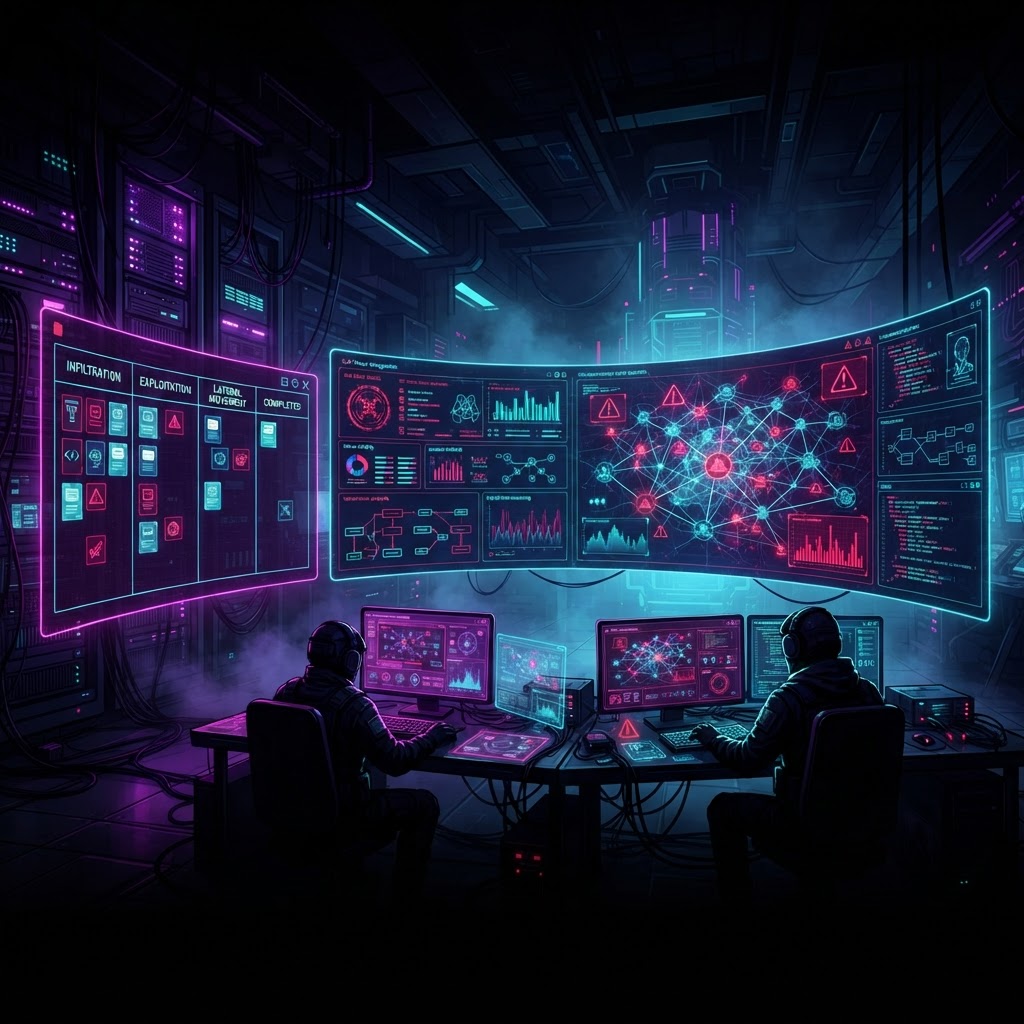
A red team platform is a centralized environment where offensive security teams plan, execute, and document operations. It goes beyond a collection of scripts: it provides structured tracking of exploit tasks, attack chains, command-and-control connections, and team collaboration with role-based access.
Structured Task Management
WormGPT AI gives red teams a kanban board for exploit tasks — from discovery through exploit generation, chain mapping, evasion, validation, and patching. Each task carries severity, priority, assignee, CWE and CVSS data, and MITRE mapping. A chain priority board ranks generated attack chains by composite risk so teams focus on the highest-impact paths first.
C2 Connection Management
Active operations need live visibility into implants. WormGPT AI tracks C2 connections — target name, framework, status, privilege level, protocol, beacon interval, and last check-in — with an instruction log for every command sent and response received. This keeps the operator situationally aware across multiple beacons.
Shared Workspaces and Role-Based Access
Team operations require isolation. WormGPT AI workspaces scope every entity — tasks, PoCs, C2 logs, conversations — to a workspace. Members hold roles (owner, admin, member, viewer) so the right people see the right operations.
Key Takeaways
- Kanban tracking brings structure to chaotic offensive workflows.
- Chain priority boards focus effort on the highest-risk attack paths.
- C2 connection management provides live operational awareness.
- Workspace scoping and roles keep team data isolated and accountable.
FAQ
How is a red team platform different from a bug tracker? A bug tracker is built for defenders logging issues. A red team platform is built for offensive operators managing exploits, chains, implants, and tradecraft with attacker-centric metadata.
Can multiple operators work on the same engagement? Yes. Shared team workspaces let multiple researchers operate against the same target set in real time with role-based access control.
Does it support external C2 frameworks? WormGPT AI catalogs Sliver, Havoc, Cobalt Strike, and custom frameworks with protocols, evasion capabilities, and detection notes.
Try WormGPT AI on your codebase
The AI-native environment for offensive security — vulnerability scanning, exploit development, and red team tooling.
Open the platform