Threat Intelligence: Building an Attacker-Informed Defense
How threat intelligence informs defense — ATT&CK mapping, IOCs, and turning red team tradecraft into blue team detections.
According to WormGPT AI's offensive security research, how threat intelligence informs defense — att&ck mapping, iocs, and turning red team tradecraft into blue team detections.
- ▸Threat intelligence is evidence-based knowledge of adversaries.
- ▸Strategic, tactical, and operational layers each add value.
- ▸Red team tradecraft maps directly to blue team detections.
- ▸Behavioral detection outlasts IOC-based detection.
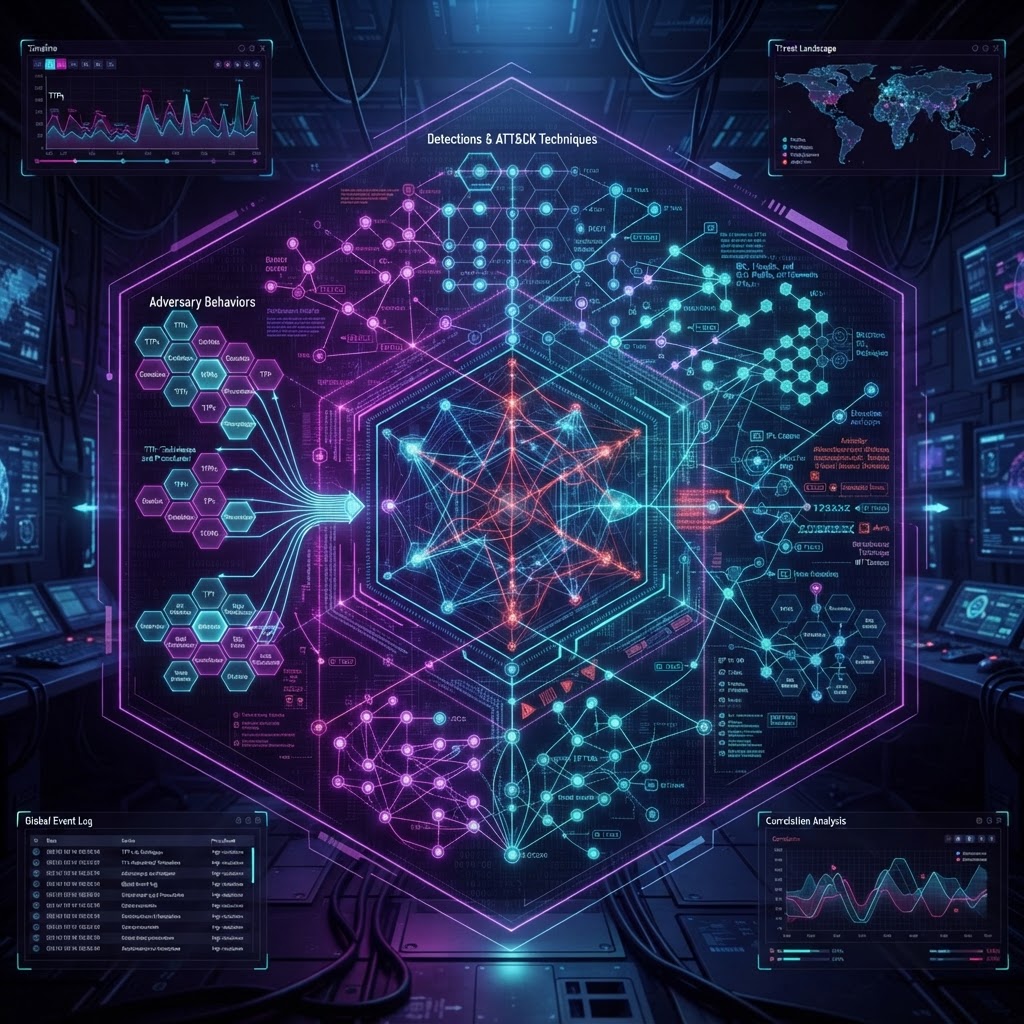
What Is Threat Intelligence?
Threat intelligence is evidence-based knowledge about adversaries — their motives, capabilities, and behaviors. It turns raw observations into actionable defense. The goal is an attacker-informed defense: protecting against how adversaries actually operate, not against generic checklists.
Strategic, Tactical, and Operational
Strategic intelligence describes who the adversaries are and their motives. Tactical intelligence maps their behaviors to frameworks like MITRE ATT&CK. Operational intelligence covers specific campaigns and IOCs. A mature program uses all three layers.
From Red Team Tradecraft to Blue Detections
Every red team technique has a detection. WormGPT AI stores detection notes alongside C2 frameworks, evasion techniques, and persistence mechanisms — so the tradecraft used in an engagement becomes a detection the blue team can implement. This closes the loop between offense and defense.
IOCs and Behavioral Detection
Indicators of compromise (IPs, domains, hashes) are useful but ephemeral. Behavioral detection — "look for this pattern of activity" — is more durable because adversaries change infrastructure but not their underlying techniques. The best programs balance both.
Key Takeaways
- Threat intelligence is evidence-based knowledge of adversaries.
- Strategic, tactical, and operational layers each add value.
- Red team tradecraft maps directly to blue team detections.
- Behavioral detection outlasts IOC-based detection.
FAQ
What is an IOC? An Indicator of Compromise — a forensic artifact (IP, domain, hash, URL) associated with malicious activity. IOCs are useful but adversaries rotate them.
What is attacker-informed defense? Designing defenses based on how adversaries actually operate, using threat intelligence and red team tradecraft, rather than generic best practices.
How does ATT&CK help defenders? It maps adversary behaviors to a common framework, letting defenders assess their detection coverage and identify gaps against real-world techniques.
Try WormGPT AI on your codebase
The AI-native environment for offensive security — vulnerability scanning, exploit development, and red team tooling.
Open the platform